
 Mani
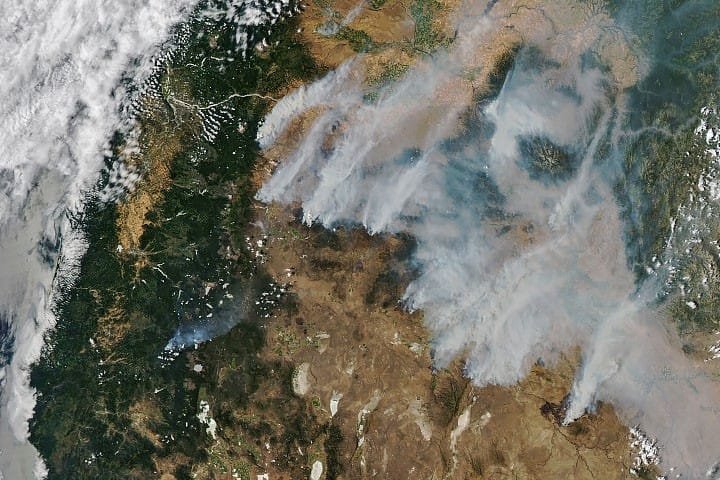
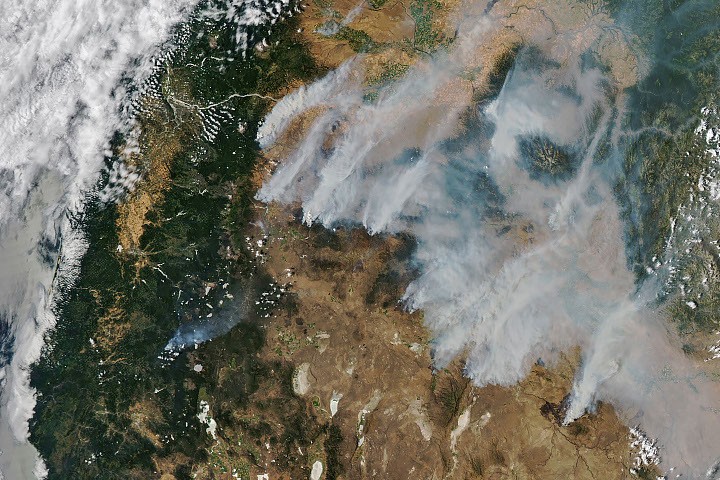
ManiImagine this: a sky suddenly alive with jagged lightning, striking across Oregon’s Cascade Range, igniting sparks that evolve into blazing wildfires. NASA’s satellites, hundreds of miles above, are like silent sentinels, capturing the chaos unfold below—thousands of fires devouring dry forests, leaving an ominous haze of smoke billowing northeastward. This isn’t just a story of destruction; it’s a stark reminder of how climate change, drought, and natural phenomena intertwine, and how space-based technology becomes vital in understanding and combating it.
The “Smoke Blankets Oregon—NASA Science” isn’t merely about pretty pictures. It’s a window into the raw power of fire and the stakes for communities and ecosystems. By mapping smoke plumes and tracking wildfire spread, NASA’s data helps responders strategize on the ground, potentially saving lives and property. More than that, these images inform scientists’ understanding of climate patterns, drought severity, and air quality—dominating factors in our health and well-being today. What’s extraordinary is how exploration technology, once used to gaze at distant planets, now directly impacts our daily lives. It turns the silent skies into a vital information network, helping us breathe clearer, act faster, and maybe, just maybe, learn how to stop these fires before they grow beyond control.
In essence, this story is a testament to the unanticipated but profound influence of NASA’s science—turning celestial eyes downward, into our home, guiding us through disaster, and pointing the way toward a safer, more informed future. The fires may rage, but the knowledge we gain from reaching beyond Earth’s bounds is crucial in easing the flames’ fury—proof that exploration isn’t just about distant worlds, but about protecting the one we call home.
From Discovery to Disruption
NASA missions are the embodiment of human progress and achievement. They showcase the heights of engineering, computer science, and innovation.
NASA’s technology, like the satellite imagery used to monitor Oregon’s smoke cover, offers valuable lessons for startups and entrepreneurs. These images give real-time data about environmental changes, showcasing the power of precision technology. Innovations behind this can inspire new tools for monitoring, data analysis, and quick response.
Here are some strategies for startups:
- Leverage Satellite Data: Develop platforms that utilize NASA’s satellite imagery to offer real-time environmental insights. This can help industries like agriculture, forestry, or disaster management improve decision-making and reduce risks.
- Incorporate NASA’s Innovation Principles: Embrace NASA’s approach of relentless testing and iteration. Use quick prototyping and data-driven adjustments in your own product development, speeding up innovation cycles and reducing costs.
- Adopt Advanced Sensors and Remote Sensing Tech: Incorporate NASA-inspired sensor technology in your products. For example, startups could create affordable portable sensors for air quality monitoring, inspired by satellite accuracy.
- Build Resilient Business Models: Use the concept of anticipating environmental risks exemplified by NASA’s fire monitoring. Craft business plans that are adaptable, able to respond swiftly to environmental changes or crises.
The significance of ‘Smoke Blankets Oregon – NASA Science’ goes beyond firefighting. It signals a future where environmental data is integrated into economic decision-making, driving smarter, more sustainable growth. In a world increasingly affected by climate change, this fusion of science and business could be key to global resilience and economic strength. The continued development of NASA-inspired technologies promises to unlock new opportunities and reshape industries worldwide.
From the desk of Mani
This is where technology and human creativity converge to solve problems, both simple and complex. It’s where innovation thrives and possibilities are limitless.
It’s a fallacy that NASA is over-funded or wasteful in its spending. Their work is critical to advancing our understanding of the universe and improving life on Earth.
NASA’s current budget is around $19 billion, which may sound like a lot, but when adjusted for inflation, it’s just a fraction of what it was in the mid-1960s.
I strive to share stories like this one to inspire and inform my readers. If you enjoyed this piece, I encourage you to explore more in the Cybersecurity section or Small Business section.
To check the original story Click here
Learn Something New
Stay informed on the latest NASA and space news at Space.com.
NASA-V3