
 Mani
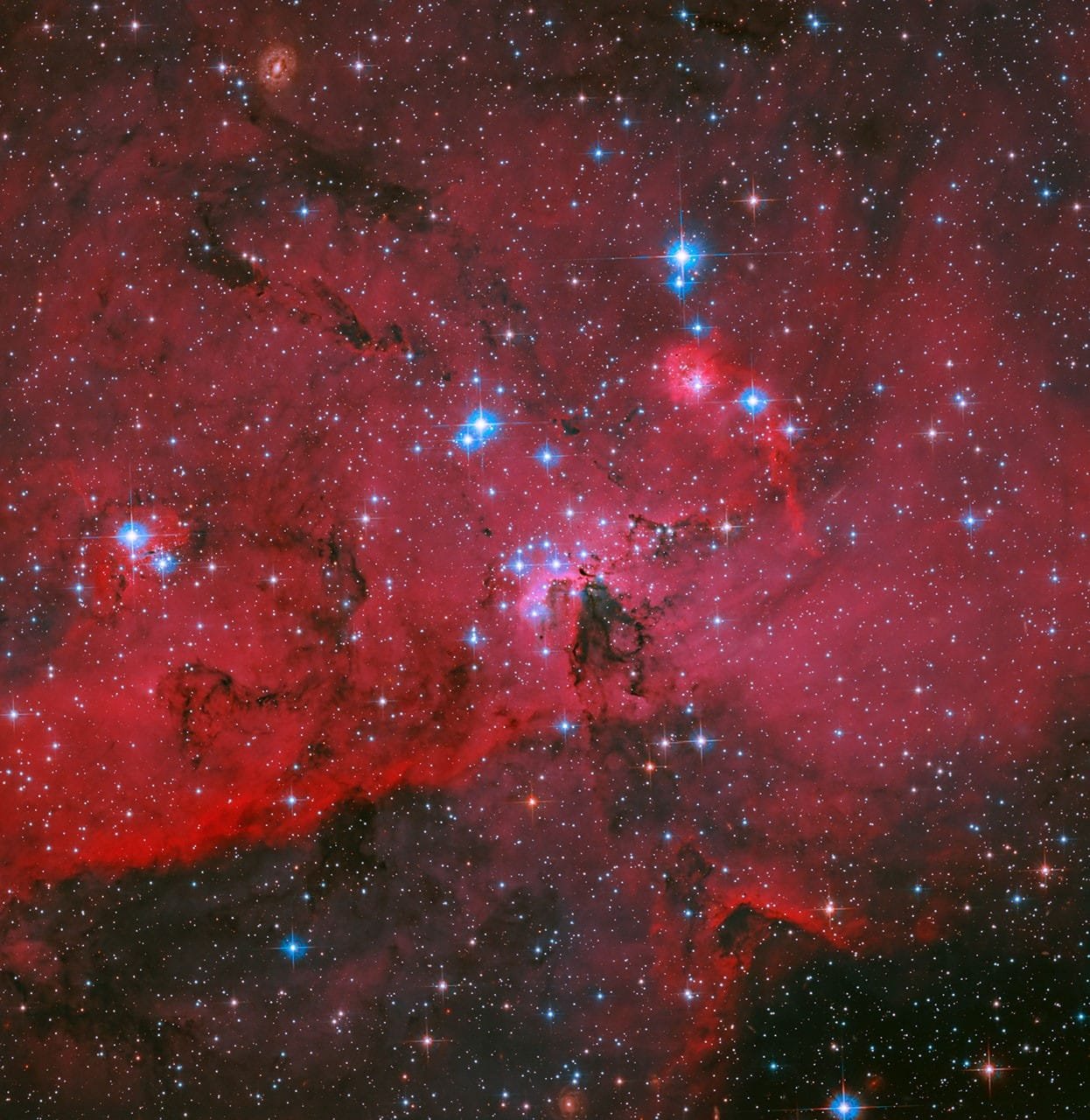
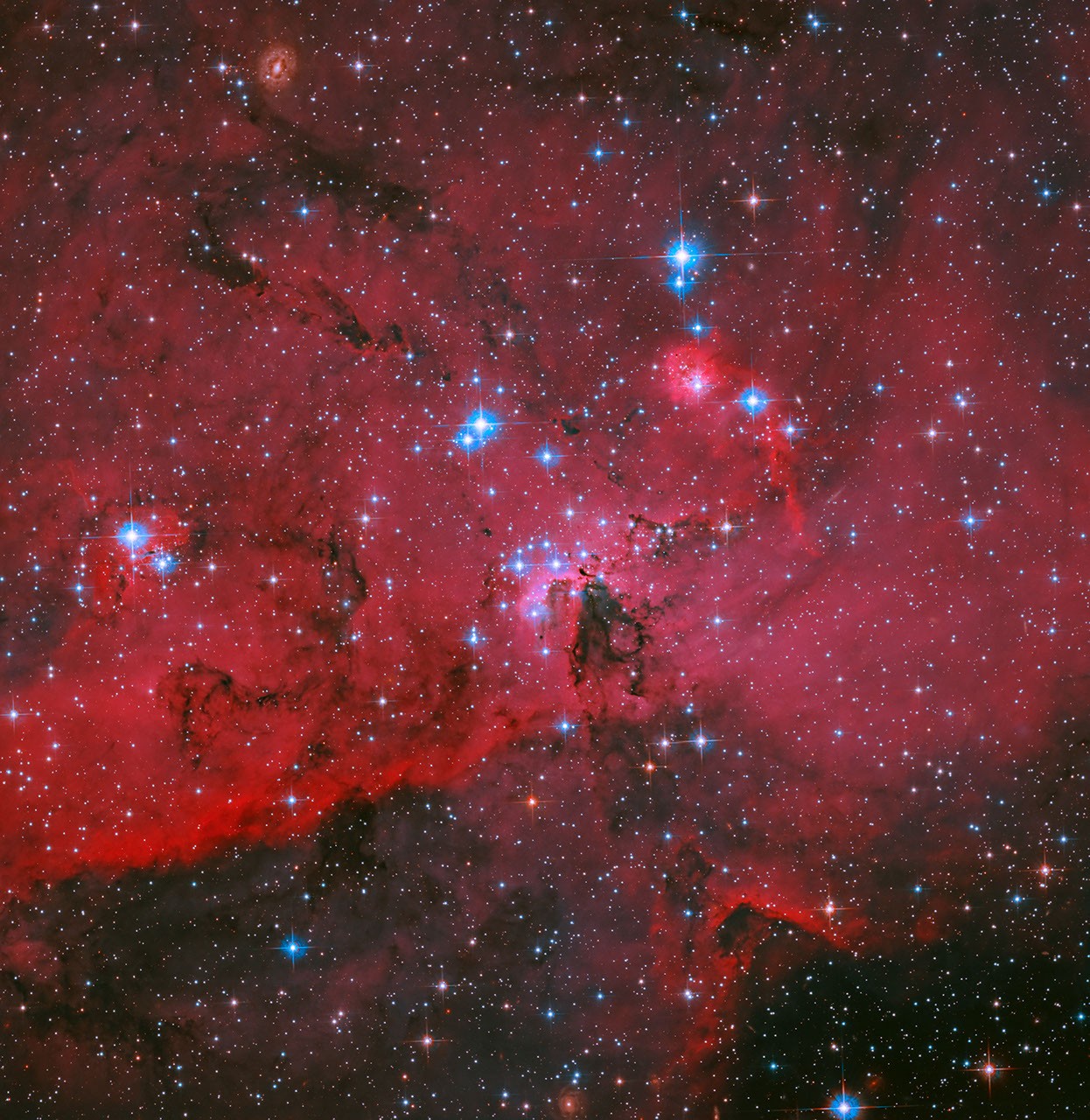
ManiImagine a cosmic fireworks display, bright blue and white stars piercing through a fiery crimson cloud. This breathtaking portrait, captured by NASA’s Hubble Space Telescope of Magellanic Crimson Cloud, isn’t just eye candy; it’s a vibrant testament to our universe’s ongoing creation story. Known as LH 95, this stellar nursery dwells within the Large Magellanic Cloud, a dwarf galaxy that orbits our very own Milky Way. Here, young stars—some weighing over three times the Sun—ignite in a celestial ballet of birth and transformation. Their intense ultraviolet radiation and stellar winds sculpt the surrounding gas, shaping the very foundation of future stars. Each flickering light and glowing gas cloud reveals not only the universe’s artistry but also its complex choreography, offering insights into how stars—and eventually planets—form.
What makes NASA’s Hubble Reveals Magellanic Crimson Cloud images are so exhilarating isn’t just their beauty but their profound relevance. They connect us to the grand narrative of our cosmic origins. Every star pictured represents a step in a universe that’s constantly evolving. Moreover, this exploration impacts our daily lives. Technologies developed for space telescopes like Hubble bleed into innovations in imaging, communication, and even environmental monitoring. In a way, understanding distant stellar nurseries sparks a deeper appreciation of the universe’s intricate balance—an understanding that fuels scientific curiosity and technological progress. The crimson cloud and shimmering stars are a vivid reminder: exploration isn’t just about looking outwards; it’s about understanding our place in the vast, wondrous cosmos, shaping the future of humanity on Earth and beyond.
Startups and the Science of Growth
NASA missions are the embodiment of human progress and achievement. They showcase the heights of engineering, computer science, and innovation.
NASA’s Hubble captures stunning images like the crimson cloud sparkling with white and blue stars. These images showcase advanced imaging technology and innovative methods to explore space. For entrepreneurs and startups, this can be a source of inspiration. Just like NASA pushes the limits of science, startups can adopt similar innovative principles.
First, they can leverage cutting-edge imaging and data analysis tools. NASA uses highly sophisticated technology to analyze distant celestial objects. Startups can adopt similar tech for customer insights, product development, or marketing analysis. Second, startups can focus on collaborative innovation. NASA partners with many organizations, sharing knowledge and resources. This spirit can help startups build strong networks and acquire new skills quickly. Third, they should emphasize rapid experimentation. NASA’s testing of new space instruments encourages a culture of trial and error. Startups can implement small experiments to test ideas faster, reducing risk and accelerating learning.
Applying NASA’s innovation principles can change how startups grow. These strategies foster resilience and adaptability, crucial in a competitive world. In the future, the understanding gained from images like the crimson star cloud could spark new industries or technologies. It might inspire breakthroughs in materials, imaging tech, or AI that shape the world economy. As space exploration advances, it also pushes economic growth here on Earth. The captivating images from NASA serve as a reminder: innovation can unlock endless possibilities, not just in space, but everywhere.
From the desk of Mani
This is where technology and human creativity converge to solve problems, both simple and complex. It’s where innovation thrives and possibilities are limitless.
Some people dismiss NASA’s work as frivolous or unnecessary, but this couldn’t be further from the truth. They make critical contributions to scientific research and innovation.
Today, NASA’s budget is $19 billion, which is less than half of what it was in the mid-1960s when adjusted for inflation. In today’s dollars, it would be equivalent to $337 billion.
I endeavor to curate stories like this one on my website. This serves a dual purpose: firstly, to provide a valuable reference for my writing endeavors, and secondly, to share insightful narratives with the wider community. If you like this story, you should check out some of the other stories in the Science section or Small Business section.
To check the original story Click here
Stay Up-to-date
Here are some more Space and Science learning resources Learning Resources for Educators.
NASA-V3