
 Mani
ManiImagine floating inside the International Space Station, weightless. You’re far from Earth’s land and sky, but suddenly, there’s a burst of freshness—a splash of bright reds, leafy greens, and juicy fruits. That’s what a fresh food delivery looks like in space. It’s more than just a snack; it’s a breakthrough for astronauts’ health and spirits.
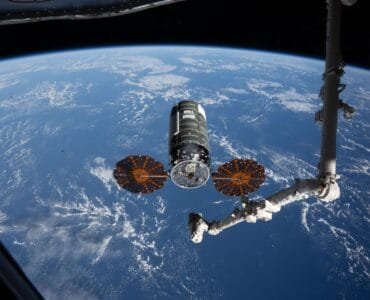
NASA’s commitment to bringing fresh food to space is a tiny miracle with enormous impact. For years, astronauts depended on pre-packaged, freeze-dried meals. Practical, yes. But these meals lack the variety and nutrients that fresh food provides. Now, thanks to advances in space logistics, astronauts can enjoy strawberries, spinach, and even crisp vegetables while orbiting hundreds of miles above Earth.
Why does this matter? Because exploring the cosmos pushes science forward—yes. But it also quietly transforms everyday life. The challenges of delivering fresh food inspire cooler storage techniques, better refrigeration, and smarter packaging. These innovations often spill over into our homes, making food last longer and stay fresher on Earth too.
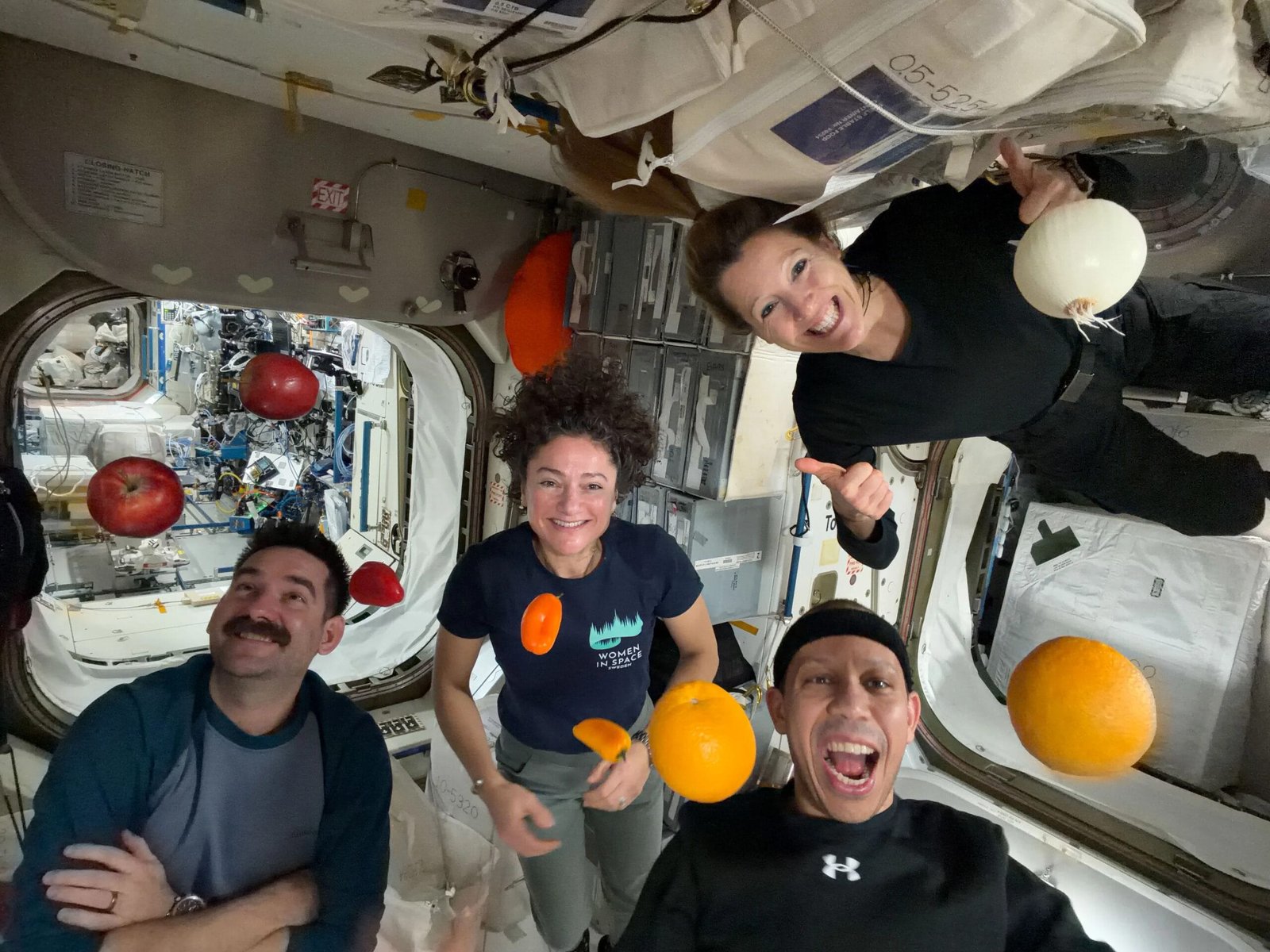
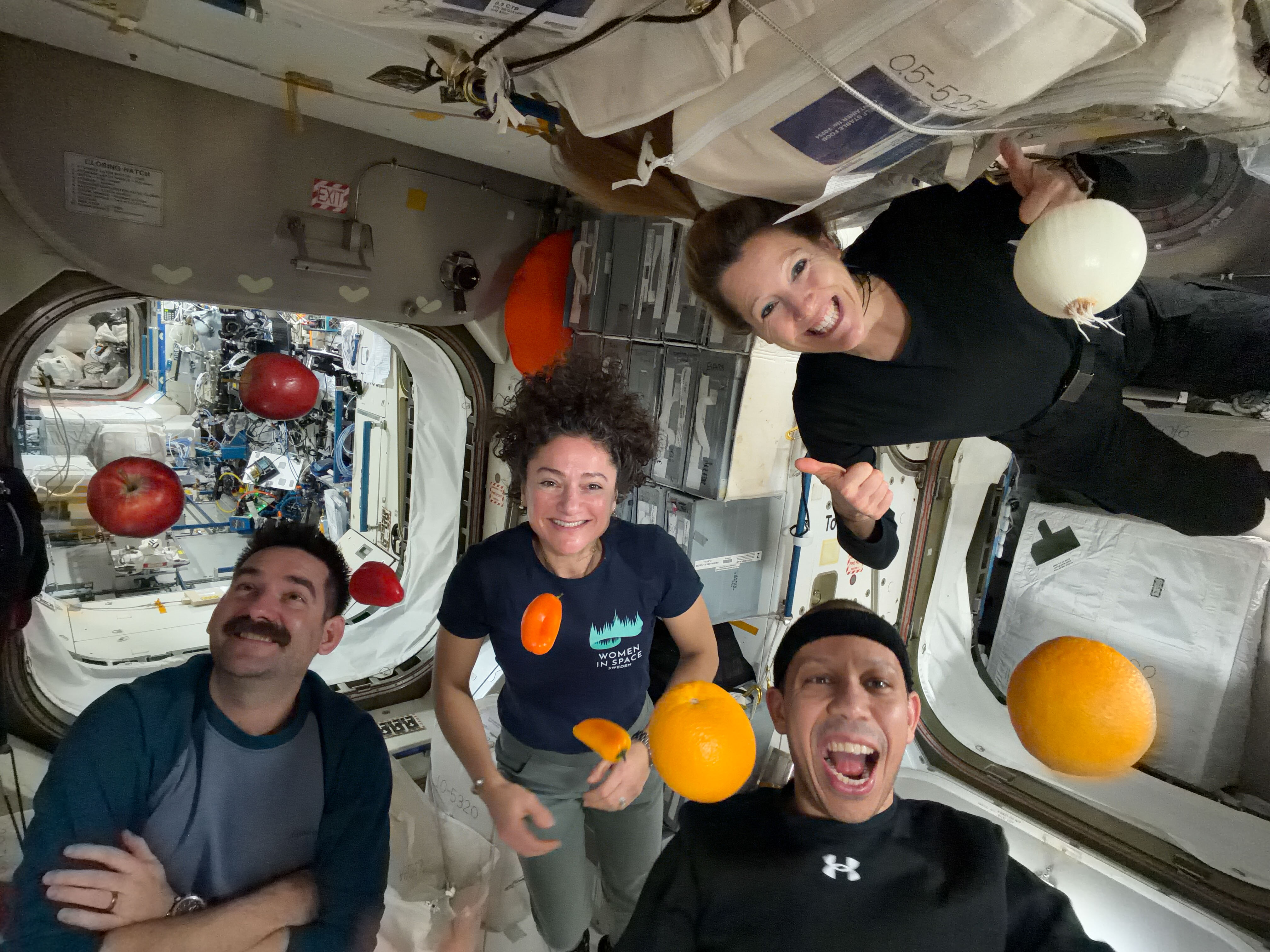
Look at the photo: astronauts Jack Hathaway, Jessica Meir, Chris Williams, and Sophie Adenot celebrating a fresh delivery. It’s playful, even joyful. They’re playing with their food. That’s something rare in space—moments of normality, of simple pleasure, made possible by perseverance and ingenuity.
Every fresh fruit, leafy green, or vegetable delivered isn’t just a treat; it’s evidence of human curiosity and resilience. It proves that exploring beyond our planet can enrich life here at home. NASA’s work in space feeding techniques advances health, nutrition, and technology—rippling impact that touches us all.
So next time you bite into a crisp apple or enjoy a salad, think about the quiet revolution happening miles above Earth—where fresh food deliveries are not just about what’s on the plate, but how exploration makes the impossible possible on every level.
At NASA, we see the culmination of our greatest scientific and engineering achievements. Their missions are a testament to the best of human knowledge and capability.
NASA’s successful delivery of fresh food to the space station showcases cutting-edge logistics and innovative technology. These methods can inspire entrepreneurs and startups in unique ways. The key lies in adapting NASA’s principles of efficiency, precision, and resilience.
First, startups can invest in advanced supply chain systems, similar to NASA’s precise planning. Using automation and real-time tracking ensures fresh supplies arrive on time, whether for space or Earth-based needs.
Second, the innovative mechanisms behind space food delivery—like specialized packaging and preservation—can be adapted for sustainable and long-lasting food products on Earth. This opens markets for healthy, fresh snacks in remote areas or disaster zones.
Third, adopting collaborative partnerships seen in space missions encourages sharing expertise across industries. Startups can team up with tech firms or research institutions to develop novel delivery technologies or packaging solutions.
Finally, applying NASA’s mindset of pushing technological boundaries can inspire startups to pioneer new business models—such as subscription services for ultra-fresh produce or eco-friendly delivery methods.
Looking ahead, ‘Fresh Food Delivery for Space Station’ could revolutionize global supply chains and food sustainability. It hints at a future where fresh food is accessible in every corner of the world, boosting economies and reducing waste. As space tech merges with everyday life, the boundaries of innovation expand—making the dream of fresh food anywhere not just possible, but essential.
From the desk of Mani
NASA isn’t just a representation of the best of the United States, it embodies our best aspirations as a species. It’s where we push the boundaries of what we thought was possible, and inspire generations to come.
Despite common misconceptions, NASA is anything but a frivolous expense. They continue to make groundbreaking discoveries and push the boundaries of what’s possible.
At just 0.5% of the total federal budget, NASA operates on a shoestring budget compared to many other government programs.
I like writing about NASA, Cybersecurity, Business and Technology Strategy from a CIO/CISO thought leadership perspective. If you like this story, you should check out some of the other stories in the Cybersecurity section or Small Business section. Management Strategy or Information and Communication Technology.
To check the original story Click here
Learn Something New
Stay informed on the latest NASA and space news at Space.com.
AI-NASA-V3